1. Plasmids
1.1 Definition and General Characteristics
Plasmids are small, circular, double-stranded DNA molecules that exist extrachromosomally in a host cell. Their size is significantly smaller than the bacterial chromosome, and they possess the ability to replicate independently of chromosomal DNA.
Plasmids are found predominantly in bacteria, although rare examples exist in eukaryotic microorganisms, such as the 2µ plasmid in the yeast Saccharomyces cerevisiae.
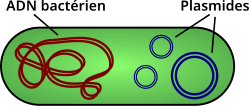
A defining property of plasmids is that they function as autonomous replicating units, because they contain their own origin of replication (ori). However, their replication is carried out using the host cellular replication machinery.
Plasmids are considered nonessential genetic elements for the survival of the host cell under normal growth conditions. Bacterial cells lacking plasmids generally remain viable. Nevertheless, plasmids frequently encode adaptive traits that confer selective advantages under specific environmental conditions.
The copy number of plasmids within a bacterial cell varies according to plasmid size and replication control mechanisms. Large plasmids typically exist in one or a few copies per cell, whereas smaller plasmids may be present in tens to hundreds of copies.
Multiple plasmids can coexist within the same bacterial cell provided they belong to compatible replication systems, meaning their replication mechanisms do not interfere with each other.
Plasmids can also be eliminated (plasmid curing) from host cells either spontaneously or through experimental treatments that inhibit plasmid replication without affecting chromosomal replication. Such treatments include:
-
Acridine dye mutagens
-
Ultraviolet or ionizing radiation
-
Growth at supra-optimal temperatures
Some plasmids are capable of integrating into the host chromosome. These plasmids are referred to as episomes. When integrated, the plasmid becomes part of the bacterial genome and replicates together with the host chromosome during cell division.
In molecular genetics, both plasmids and bacterial chromosomes are considered replicons, defined as DNA molecules or DNA sequences containing an origin of replication capable of autonomous replication.
1.2 Classification of Plasmids
Plasmids are classified according to the biological functions encoded by their genes.
1.2.1 Fertility Plasmids (F Factors)
Fertility plasmids, also known as F factors, were among the first plasmids discovered, particularly in Escherichia coli during the 1950s.
The F plasmid is approximately 100 kilobases (kb) in size and carries genes that enable bacterial conjugation, a mechanism of horizontal gene transfer between bacterial cells.
Cells harboring the F plasmid synthesize sex pili, specialized filamentous structures that mediate contact between donor and recipient bacteria. Through these pili, the donor cell transfers a replicated copy of the F plasmid to the recipient cell.
The genes responsible for conjugative transfer are located in the tra (transfer) operon, which contains more than 28 genes involved in:
-
Pili formation
-
DNA processing
-
Plasmid transfer mechanisms
Some F plasmids behave as episomes, meaning they can integrate into the bacterial chromosome. When integrated, they create Hfr (high frequency recombination) strains, which play an important role in bacterial genetic exchange.
1.2.2 Resistance Plasmids (R Plasmids)
Resistance plasmids, or R factors, encode genes that confer resistance to antibiotics or toxic compounds, including heavy metals.
These plasmids typically remain extrachromosomal but can spread efficiently within bacterial populations through conjugation.
Examples of antibiotic resistance genes commonly found on R plasmids include resistance to:
-
Ampicillin
-
Chloramphenicol
-
Kanamycin
Some R plasmids contain a single resistance gene, whereas others may carry multiple resistance determinants, sometimes up to eight different resistance genes.
R plasmids usually consist of two major genetic components:
-
Resistance Transfer Factor (RTF)
Contains genes responsible for plasmid replication and conjugative transfer. -
r Determinant Region
Contains genes encoding enzymes that inactivate antibiotics or toxic compounds.
Recombination events between different R plasmids can generate new plasmids containing novel combinations of resistance genes, contributing to the rapid spread of multidrug resistance in bacterial populations.

1.2.3 Col Plasmids
Certain plasmids provide bacteria with a competitive advantage in microbial ecosystems.
These plasmids encode bacteriocins, which are toxic proteins produced by bacteria to inhibit or kill closely related bacterial species.
Col plasmids encode bacteriocins known as colicins, which specifically target Escherichia coli. Similar plasmids in other bacteria encode bacteriocins such as cloacins, which target species of Enterobacter.
Bacteriocins can kill target bacteria through several mechanisms, including:
-
Formation of pores in the cytoplasmic membrane
-
DNA or RNA degradation
-
Hydrolysis of peptidoglycan, weakening the bacterial cell wall
Producer bacteria possess immunity proteins that protect them from their own bacteriocins.
Some Col plasmids are conjugative and may also carry antibiotic resistance genes.
1.2.4 Virulence Plasmids
Many pathogenic bacteria harbor virulence plasmids, which encode genes that enhance the pathogenic potential of the microorganism.
These plasmids may encode:
-
Toxins
-
Adhesion factors
-
Colonization factors
-
Invasion proteins
For example, enterotoxigenic Escherichia coli (ETEC) strains responsible for traveler’s diarrhea contain plasmids encoding:
-
Colonization factors, enabling bacterial attachment to intestinal cells
-
Enterotoxins, responsible for disease symptoms
Thus, virulence plasmids play a key role in bacterial pathogenicity and host infection mechanisms.
1.2.5 Metabolic Plasmids
Metabolic plasmids carry genes encoding enzymes involved in specialized metabolic pathways, allowing bacteria to utilize unusual substrates as sources of carbon or energy.
Examples include genes enabling:
-
Citrate utilization in E. coli
-
Sulfur compound metabolism
-
Urea hydrolysis
In some Salmonella species, plasmids enable lactose metabolism, which is otherwise uncommon in this genus.
A notable example occurs in Rhizobium species, where plasmids encode genes required for nodulation in legumes and biological nitrogen fixation, establishing symbiotic interactions with plants.
2. Bacteriophages
A bacteriophage (phage) is a virus that infects bacterial cells.
Like all viruses, bacteriophages are obligate intracellular parasites, meaning they require a host cell to replicate. Their genetic material may consist of DNA or RNA, enclosed within a protein capsid, sometimes associated with additional structural components.
Phages are typically observed using electron microscopy, as they are too small to be seen with light microscopy. However, their presence can be detected indirectly by lysis plaques, clear zones formed on bacterial lawns due to bacterial destruction.
Bacteriophages are commonly classified according to their replication strategy:
-
Lytic cycle: the phage replicates and lyses the host cell.
-
Lysogenic cycle: the phage genome integrates into the bacterial chromosome and replicates passively with the host cell.
2.1 Bacteriophage Lambda (λ)
Morphology
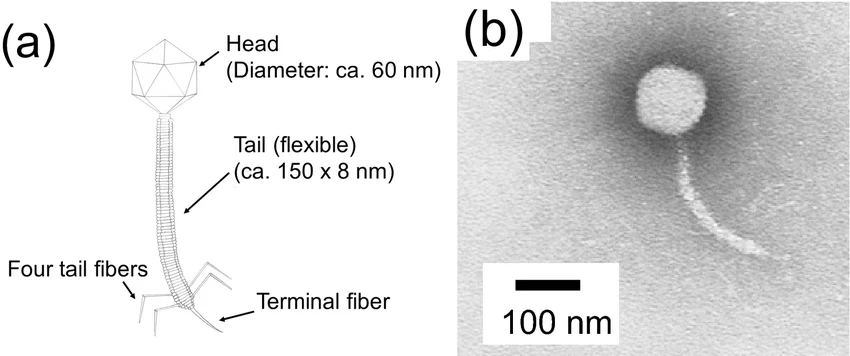
The lambda bacteriophage (λ) infects Escherichia coli and possesses:
-
A double-stranded DNA genome
-
A protein capsid composed of a head and a tail
-
Approximately 15 structural proteins, all encoded by the viral genome.
The genome can exist in both linear and circular forms.
Genomic Characteristics
The λ genome consists of linear double-stranded DNA of approximately 45.5 kilobases. The terminal regions contain cos sequences, which are 12-nucleotide complementary single-stranded overhangs.
These complementary sequences allow the viral DNA to circularize after entry into the bacterial cell, which is essential for replication.
Infection Mechanism
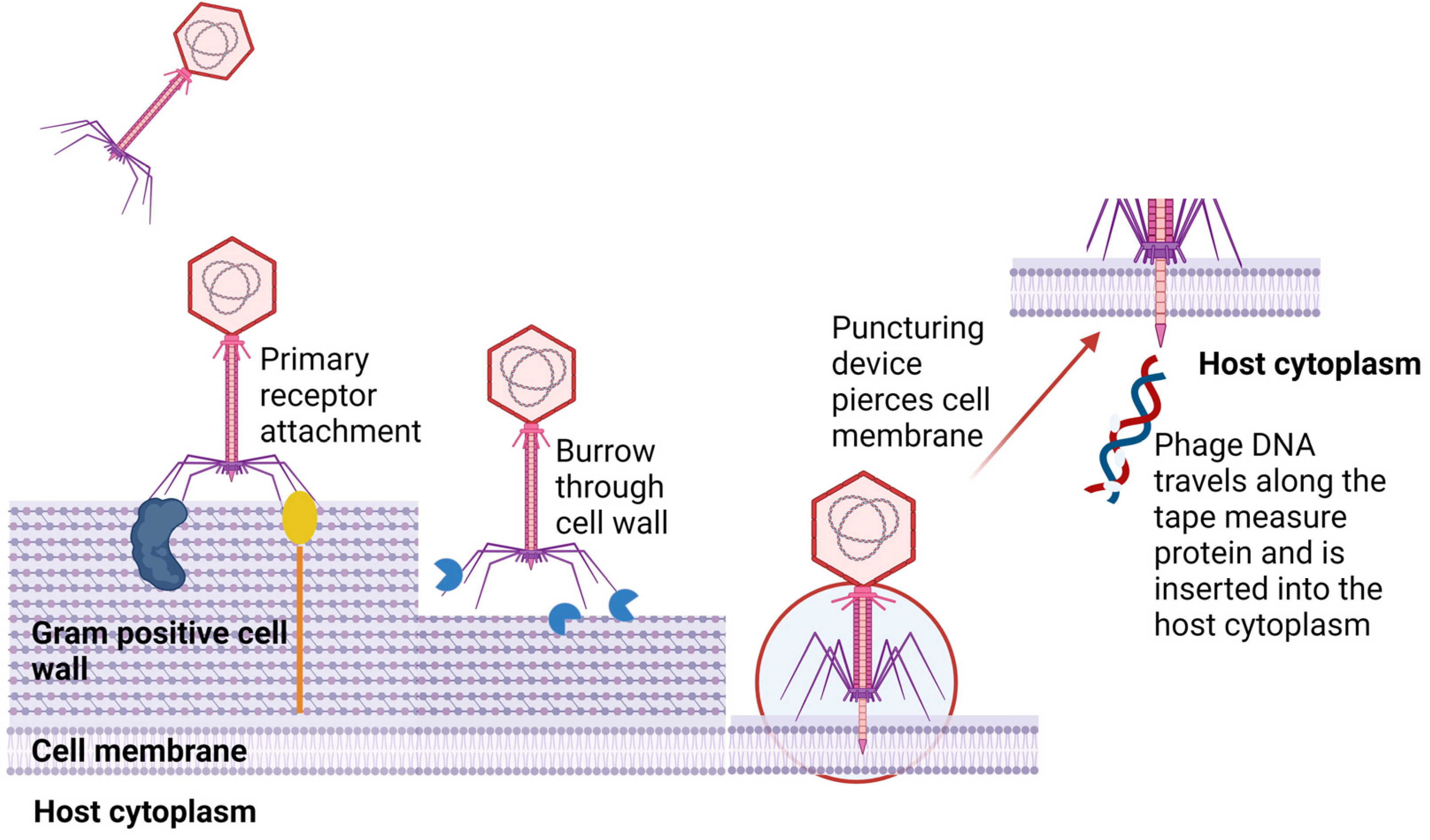
The infection process involves several sequential steps:
-
Attachment of the phage tail to the bacterial surface.
-
Penetration, during which the phage tail forms a channel through the bacterial envelope.
-
Injection of viral DNA into the host cytoplasm, while the capsid remains outside the cell.
Genome Circularization
Once inside the host cell, the linear phage DNA undergoes circularization through pairing of the complementary cos ends, facilitating replication and transcription.

Developmental Pathways
Lambda phage can follow two alternative developmental pathways:
1. Lytic Cycle
-
Viral DNA replication
-
Synthesis of structural proteins
-
Assembly of new phage particles
-
Host cell lysis and release of progeny phages
2. Lysogenic Cycle
-
Integration of phage DNA into the bacterial chromosome
-
Formation of a prophage
-
Passive replication with the host genome until induction triggers entry into the lytic cycle

Lambda Genome Organization
The λ genome contains several functional gene classes:
-
Head genes: encode capsid proteins
-
Tail genes: encode tail structures
-
DNA replication genes: control viral genome replication
-
Lysis genes: produce enzymes that degrade the bacterial cell wall
-
Recombination genes: mediate integration and excision of the prophage
-
Regulatory genes (N, Q, CI, CII, Cro): control gene expression and determine whether the phage enters the lytic or lysogenic pathway.

2.2 Bacteriophage T4
The T4 bacteriophage is a well-characterized virus that infects Escherichia coli.
Key features include:
-
Double-stranded DNA genome
-
Belonging to the Myoviridae family
-
Approximate size of 150 nm
-
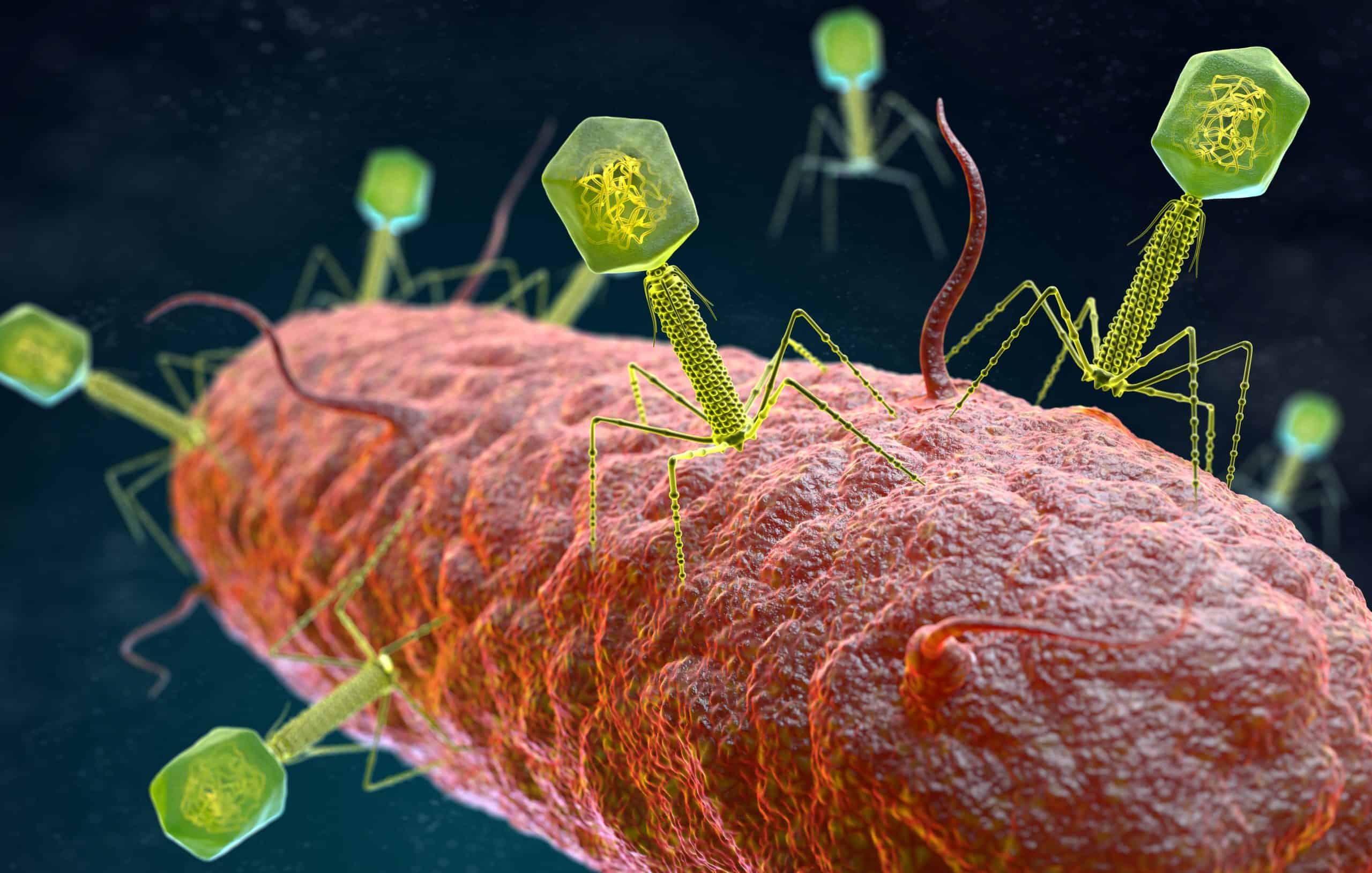
Complex morphology consisting of a polyhedral head, contractile tail sheath, base plate, and tail fibers
Unlike lambda phage, T4 follows strictly a lytic life cycle, in which the viral replication process culminates in destruction (lysis) of the host bacterial cell and release of newly assembled phage particles.